

simply amazing, always for you,
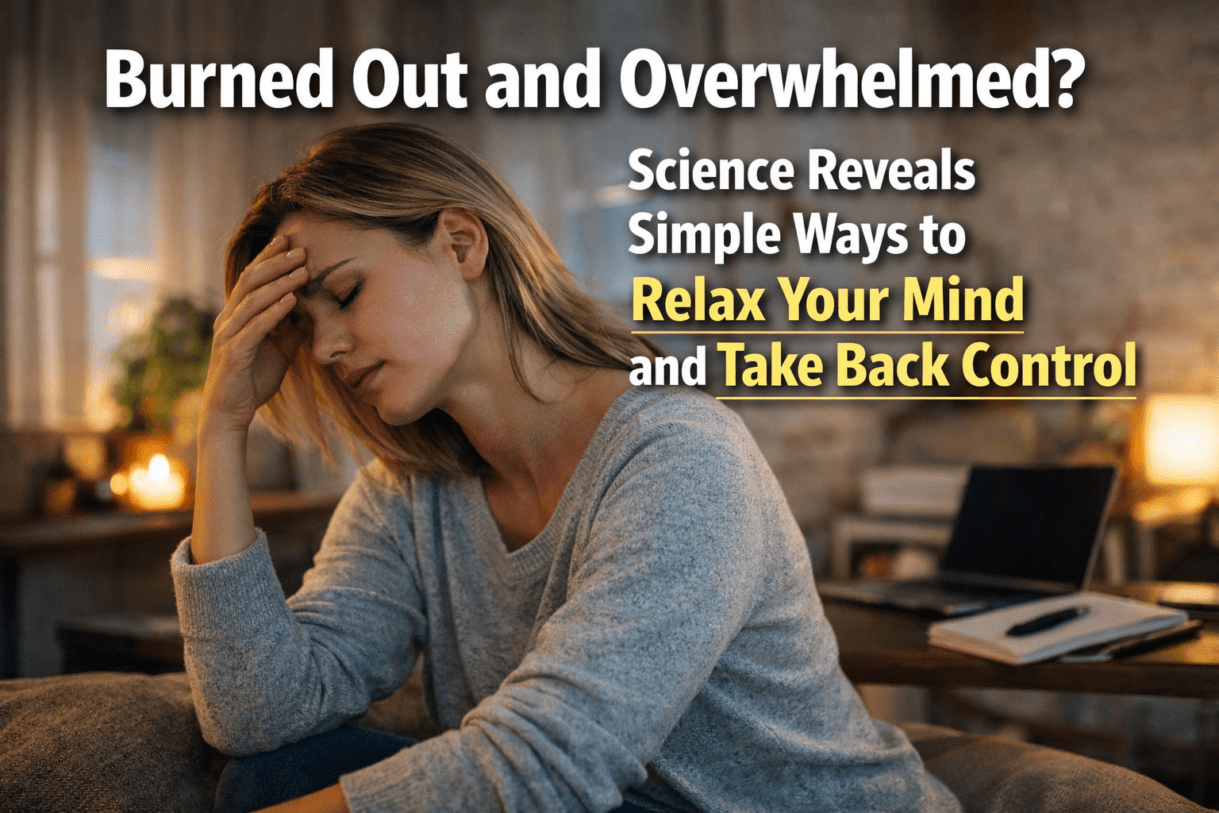
Why Relaxation Is No Longer Optional
Modern life has quietly redefined what it means to be “normal.” Constant notifications, financial pressure, social expectations, and information overload have created a baseline level of stress that many people now accept as part of everyday life. The problem is that your body does not interpret stress as “normal”—it interprets it as a potential threat.
When stress becomes chronic, your body remains in a heightened state of alert. This affects your sleep, concentration, digestion, mood, and even long-term health. Learning how to relax is not just about comfort; it is a biological necessity.
At the center of relaxation is the activation of the parasympathetic nervous system, the system responsible for recovery, repair, and calm. When this system is engaged, your heart rate slows, muscles loosen, breathing deepens, and your mind becomes clearer.
This article breaks down how relaxation works, why it matters, and how to apply practical techniques that actually work in real life.
Understanding Stress Before You Can Relax
The Stress Response: Fight, Flight, or Freeze
Your body is designed to respond quickly to danger. When a threat is detected, the brain signals the release of stress hormones like adrenaline and cortisol. This triggers:
- Increased heart rate
- Faster breathing
- Muscle tension
- Heightened awareness
This is known as the “fight or flight” response. It is useful in short bursts but harmful when constantly activated.
The Problem With Modern Stress
Unlike physical threats in the past, modern stressors are often psychological and continuous:
- Work deadlines
- Financial uncertainty
- Social comparison
- Information overload
Because these stressors don’t “end” clearly, your body rarely gets the signal to relax. That’s why deliberate relaxation techniques are essential.
What Relaxation Really Means
Relaxation is not simply doing nothing. It is an active process that shifts your body out of stress mode and into recovery mode.
True relaxation involves:
- Reduced muscle tension
- Slower breathing
- Lower heart rate
- Mental clarity
It is a measurable physiological change, not just a feeling.
The Role of the Nervous System in Relaxation
Your nervous system has two main branches:
- Sympathetic Nervous System – Activates stress responses
- Parasympathetic Nervous System – Promotes relaxation and recovery
Most people spend too much time in sympathetic dominance. Effective relaxation techniques work by activating the parasympathetic system.
Technique 1: Controlled Breathing — The Fastest Way to Relax
Breathing is one of the few bodily functions you can control consciously, and it directly affects your nervous system.
Why It Works
Slow, deep breathing signals safety to your brain. It reduces cortisol levels and slows your heart rate.
How to Do It
- Inhale slowly through your nose for 4 seconds
- Hold for 4 seconds
- Exhale through your mouth for 6–8 seconds
- Repeat for 3–5 minutes
What Happens in Your Body
- Oxygen levels stabilize
- Heart rate decreases
- Muscle tension reduces
This technique is one of the fastest ways to shift your body into a relaxed state.
Technique 2: Progressive Muscle Relaxation
Many people carry tension without realizing it. This is where progressive muscle relaxation becomes useful.
How It Works
You systematically tense and then release different muscle groups, teaching your body the difference between tension and relaxation.
Steps
- Start with your feet and work upward
- Tighten each muscle group for 5 seconds
- Release completely
- Move to the next area
Benefits
- Reduces physical tension
- Improves body awareness
- Enhances sleep quality
Technique 3: Reducing Mental Overload
Your brain is not designed to process constant input. Continuous exposure to screens and information prevents relaxation.
Practical Steps
- Take scheduled breaks from devices
- Limit social media usage
- Create “quiet time” daily
Even short breaks allow your brain to reset and reduce cognitive fatigue.
Technique 4: Movement as a Form of Relaxation
Contrary to popular belief, relaxation does not always mean being still. Gentle movement can help release stress.
Effective Options
- Walking at a slow, steady pace
- Stretching
- Practicing yoga
Why Movement Works
- Releases built-up muscle tension
- Improves blood circulation
- Stimulates mood-enhancing chemicals
Technique 5: Grounding Techniques for Overthinking
When your mind is racing, grounding techniques bring your focus back to the present.
The 5-4-3-2-1 Method
- 5 things you can see
- 4 things you can feel
- 3 things you can hear
- 2 things you can smell
- 1 thing you can taste
Why It Works
This technique interrupts anxious thought patterns and reduces mental overload.
Technique 6: Environmental Design for Relaxation
Your surroundings influence your mental state more than you realize.
Key Factors
- Lighting: Soft, warm light promotes calm
- Noise: Reduce background noise or use calming sounds
- Comfort: Choose a space that feels physically relaxing
Small environmental changes can significantly improve your ability to relax.
Technique 7: Sleep as the Foundation of Relaxation
Sleep is the most powerful form of recovery.
Why Sleep Matters
- Restores brain function
- Regulates hormones
- Repairs the body
Tips for Better Sleep
- Maintain a consistent schedule
- Avoid screens before bed
- Create a calm sleeping environment
Without proper sleep, other relaxation techniques become less effective.
The Psychological Side of Relaxation
Relaxation is not only physical; it also involves your thoughts and beliefs.
Common Barriers
- Feeling guilty for resting
- Constant productivity mindset
- Fear of falling behind
Reframing Relaxation
Relaxation should be seen as an investment, not a waste of time. It improves:
- Productivity
- Decision-making
- Emotional stability
Long-Term Benefits of Relaxation
Consistent relaxation practices lead to measurable improvements:
Physical Health
- Lower blood pressure
- Improved immune function
- Reduced risk of chronic illness
Mental Health
- Reduced anxiety
- Better focus
- Improved mood
Performance
- Increased productivity
- Better problem-solving
- Enhanced creativity
Creating a Daily Relaxation Routine
Morning
- Deep breathing (2–5 minutes)
- Light stretching
Midday
- Short walk or movement break
- Screen break
Evening
- Reduce stimulation
- Practice relaxation techniques
- Prepare for sleep
Consistency is more important than duration.
A Simple 3-Minute Relaxation Protocol
When you are overwhelmed, use this quick reset:
- Slow your breathing (4–4–8 pattern)
- Relax your shoulders and jaw
- Focus on your surroundings
This short routine can quickly calm your body and mind.
Common Mistakes People Make When Trying to Relax
1. Trying Too Hard
Relaxation cannot be forced. It happens when you allow your body to shift naturally.
2. Using Distractions Instead of Relaxation
Scrolling on your phone may feel relaxing, but it often overstimulates your brain.
3. Ignoring Physical Tension
Mental stress often starts in the body. Addressing physical tension is essential.
When Relaxation Feels Difficult
If you struggle to relax, it may be due to:
- Chronic stress
- Anxiety patterns
- Lack of sleep
In such cases, start small. Even one minute of controlled breathing can make a difference.
The Future of Relaxation in a Fast-Paced World
As technology advances, the pace of life will continue to increase. This makes relaxation skills even more valuable.
People who learn how to manage stress effectively will have an advantage in:
- Health
- Productivity
- Emotional resilience
Relaxation is becoming a critical life skill, not just a luxury.
Relaxation Is a Skill You Can Train
Relaxation is not something reserved for vacations or special moments. It is a skill that can be practiced and improved.
By understanding how your body responds to stress and applying simple, effective techniques, you can:
- Reduce anxiety
- Improve focus
- Enhance overall well-being
The key is consistency. Small, daily practices create lasting change.
In a world that constantly demands your attention, learning how to relax may be one of the most powerful decisions you can make.
SUGGESTED READS
- How Exercise Transforms Your Mind: The Ultimate Guide to Mental Health Benefits
- How Food Can Solve Angriness: The Science of Eating Your Way to Calm
- How to Break Free from Sugar Cravings: Tips for Healthy Eating
- How to Start a Plant-Based Diet: A Beginner’s Guide to Healthy Eating
- The 10 Best Foods for Boosting Your Immune System Naturally
- Why Is My Nipple or Breast Painful? Understanding the Causes, Symptoms, and Solutions

Support Our Website!
We appreciate your visit and hope you find our content valuable. If you’d like to support us further, please consider contributing through the TILL NUMBER: 9549825. Your support helps us keep delivering great content!
If you’d like to support Nabado from outside Kenya, we invite you to send your contributions through trusted third-party services such as Remitly, western union, SendWave, or WorldRemit. These platforms are reliable and convenient for international money transfers.
Please use the following details when sending your support:
Phone Number: +254701838999
Recipient Name: Peterson Getuma Okemwa
We sincerely appreciate your generosity and support. Thank you for being part of this journey!
I just wanted to construct a brief word in order to appreciate you for these splendid instructions you are posting here. My time consuming internet look up has at the end been rewarded with reasonable suggestions to talk about with my classmates and friends. I would tell you that many of us website visitors actually are undeniably lucky to be in a very good website with so many awesome people with insightful points. I feel truly lucky to have used your webpages and look forward to many more awesome minutes reading here. Thanks once more for everything.