

simply amazing, always for you.
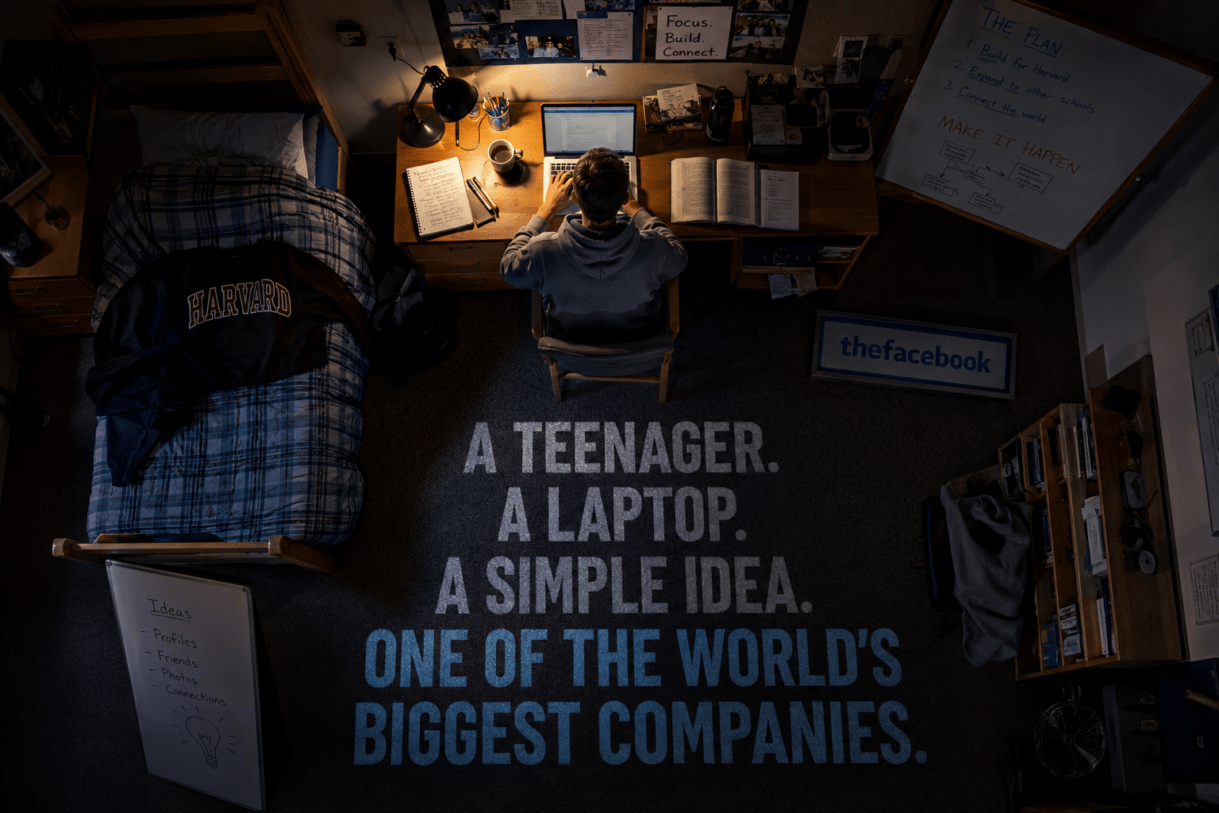
In 2004, a quiet college student sitting in a Harvard dorm room launched a small website designed mainly for students to connect online. It was never supposed to reshape politics, communication, business, entertainment, and human relationships across the globe. But that is exactly what happened.
That student was Mark Zuckerberg, and the tiny campus project he created eventually became Meta Platforms — one of the most influential technology companies in modern history.
What makes the story even more fascinating is that Facebook was not originally built as a world-changing invention. It started almost accidentally, fueled by curiosity, coding skills, and the social culture of college life.
Today, billions of people use platforms connected to Zuckerberg’s empire every month. Yet few realize how unexpectedly it all began.
A Dorm Room Experiment That Changed the Internet
In the early 2000s, social networking websites already existed. Platforms like Myspace and Friendster were attracting young internet users, but online interaction still felt fragmented and chaotic.
At Harvard University, students relied on printed directories called “face books” that contained names and photos of classmates. Zuckerberg saw an opportunity to digitize the idea.
At just 19 years old, he launched a website called “TheFacebook” from his dorm room in February 2004. The concept was simple: Harvard students could create profiles, upload photos, and connect with classmates online.
Nobody expected the platform to explode.
Within days, thousands of students had signed up.
Soon, the site expanded beyond Harvard to other Ivy League universities, then to colleges across the United States. The growth was so rapid that Zuckerberg and his small team realized they had stumbled onto something much bigger than a campus project.
The Early Days Were Far From Perfect
The story of Facebook’s rise is not a clean fairy tale.
Before launching Facebook, Zuckerberg had created another controversial website called “Facemash,” which allowed students to compare photos of classmates. Harvard administrators shut it down quickly after complaints about privacy and misuse of student images.
That incident nearly got him expelled.
But it also revealed something important: people were deeply curious about online social interaction.
When Facebook launched shortly afterward, Zuckerberg approached the idea differently. Instead of turning students into entertainment, he focused on identity and connection.
The formula worked.
Users spent hours updating profiles, messaging friends, and exploring social networks that suddenly felt alive online.
Leaving Harvard Behind
As Facebook’s popularity exploded, Zuckerberg faced a life-changing decision.
Should he stay at Harvard and complete his degree, or leave school to focus entirely on the fast-growing startup?
He chose the company.
Like several famous tech founders before him, Zuckerberg dropped out of college and moved to California with his team. They rented a house in Palo Alto that doubled as both office and living space.
The environment was chaotic, youthful, and unpredictable.
Employees worked long nights fueled by pizza, caffeine, and ambition. The company was growing faster than almost anyone could control.
Investors soon began pouring money into Facebook, sensing enormous potential.
From College Network to Global Empire
What began as a student-only website gradually opened to the public.
That decision changed everything.
Facebook transformed from a university tool into a global communication platform. Families, businesses, celebrities, politicians, and brands rushed to join.
The platform became central to modern life.
People used it to:
- Share personal moments
- Follow breaking news
- Promote businesses
- Organize political movements
- Reconnect with old friends
- Build online communities
At its peak growth, Facebook was adding millions of users every month.
The company expanded aggressively, acquiring major platforms including:
- Oculus
These acquisitions helped Zuckerberg build a digital empire that stretched across social media, messaging, advertising, and virtual reality.
The Money Became Unimaginable
Facebook’s rise created enormous wealth.
When the company went public in 2012, it became one of the largest technology IPOs in history.
Zuckerberg, still in his twenties, became one of the richest people on Earth.
What shocked many observers was how quickly it happened.
Less than a decade earlier, he had been an unknown teenager coding in a dorm room. Now he controlled a platform influencing billions of people worldwide.
The transformation was unprecedented in internet history.
The Power and the Controversy
As Facebook grew, so did criticism.
The company faced major controversies involving:
- User privacy
- Data collection
- Election interference
- Misinformation
- Mental health concerns
- Online manipulation
Governments around the world began investigating the platform’s influence.
Critics argued Facebook had become too powerful, while supporters insisted it revolutionized communication and gave ordinary people a voice online.
Zuckerberg frequently appeared before lawmakers to defend the company’s practices.
The image of the young college coder evolved into that of a global tech executive navigating enormous political and social pressure.
Facebook Becomes Meta
In 2021, Facebook’s parent company rebranded itself as Meta Platforms.
The move signaled Zuckerberg’s ambition to build the “metaverse” — a future digital world blending virtual reality, social networking, gaming, and workspaces.
Some saw the move as visionary.
Others viewed it as an attempt to move beyond Facebook’s growing controversies.
Regardless of opinion, Zuckerberg remained one of the most influential figures in global technology.
Why Facebook’s Story Still Fascinates People
The Facebook story continues to captivate millions because it reflects the unpredictable nature of the internet age.
A teenager with programming skills and a simple idea accidentally created a platform that changed:
- Politics
- Relationships
- Advertising
- News distribution
- Business marketing
- Global communication
Few companies in history have shaped society so quickly.
The story also represents a broader truth about innovation: some of the biggest revolutions begin as small experiments nobody takes seriously.
Facebook was never planned as a trillion-dollar influence machine.
It started as a college networking tool.
That unexpected beginning is what makes the story remarkable.
The Legacy of a Dorm Room Idea
Whether admired or criticized, Facebook permanently changed the digital world.
Today, billions of people interact daily through platforms connected to Zuckerberg’s company. Entire industries now depend on social media ecosystems that barely existed two decades ago.
The internet itself evolved because of Facebook’s success.
And it all traces back to one teenager experimenting with code at Harvard.
Few accidental creations in human history have ever become this powerful.
SUGGESTED READS
- Why Is It Cooler at Night Compared to Daytime
- Why Your Daily Spending Decisions Matter More Than You Think
- Who Invented the Internet and How It Changed the World
- How to Supercharge Your Productivity at Work
- Unlock Your Brain’s Full Power: 10 Mind-Blowing Benefits of Daily Mindfulness You Can’t Ignore
- Struggling to Focus at Home? Fix Your Motivation Today
- “Tuko Kadi”: The Phrase Powering Kenya’s Political Awakening, Youth Identity, and Digital Culture

Support Our Website!
We appreciate your visit and hope you find our content valuable. If you’d like to support us further, please consider contributing through the TILL NUMBER: 9549825. Your support helps us keep delivering great content!
If you’d like to support Nabado from outside Kenya, we invite you to send your contributions through trusted third-party services such as Remitly, western union, SendWave, or WorldRemit. These platforms are reliable and convenient for international money transfers.
Please use the following details when sending your support:
Phone Number: +254701838999
Recipient Name: Peterson Getuma Okemwa
We sincerely appreciate your generosity and support. Thank you for being part of this journey!