

simply amazing, always for you.
The Building That Hid a Terrifying Secret
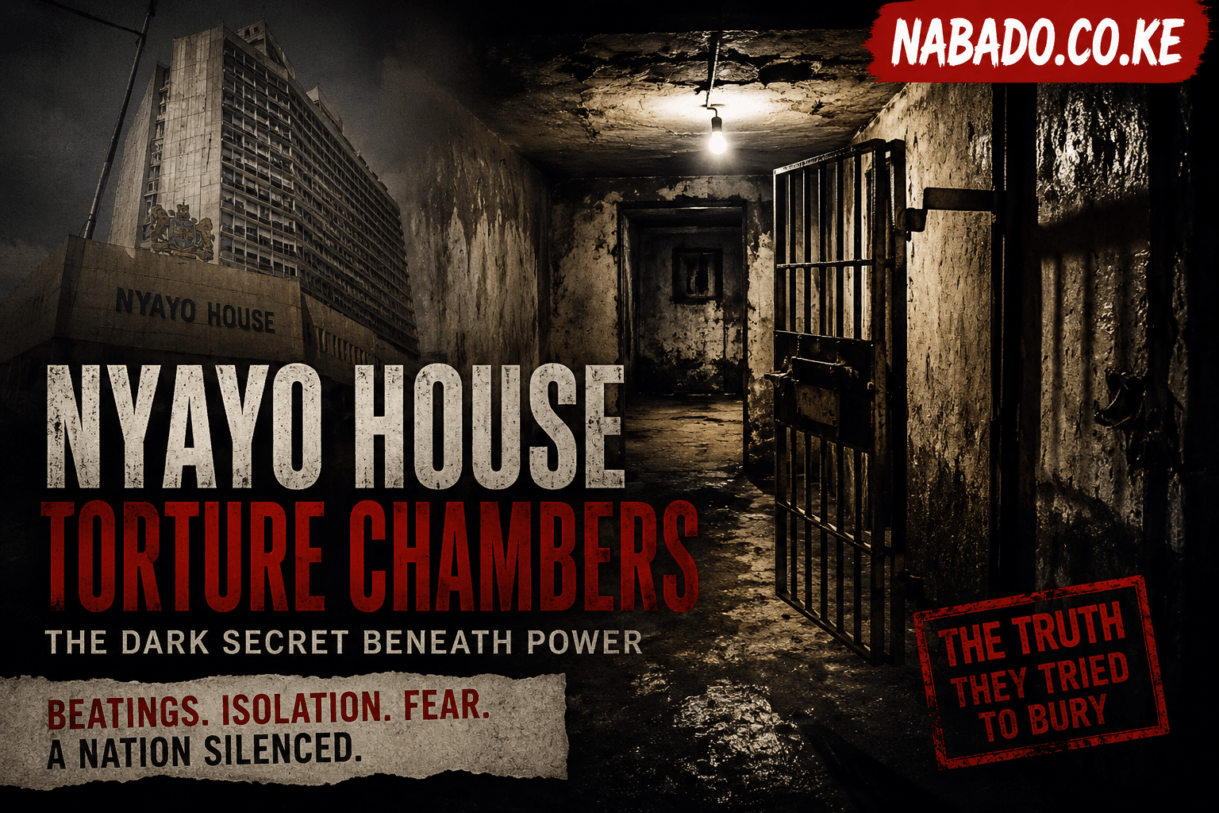
On any ordinary day, Nairobi’s bustling city center is filled with the sounds of traffic, street vendors, office workers, and people rushing to their destinations. Among the many government buildings that dominate the skyline stands Nyayo House, a towering structure that thousands of Kenyans pass every day without giving it much thought.
To a visitor, it appears to be just another government office building.
But for many Kenyans who lived through the turbulent years of the 1980s and early 1990s, Nyayo House was something else entirely.
It was a place whispered about in fear.
A place where people entered and sometimes disappeared for weeks, months, or even years.
A place whose underground chambers became synonymous with pain, terror, and political repression.
This is the story of the Nyayo House Torture Chambers—one of the darkest and most haunting chapters in Kenya’s history.
A Nation Living Under Fear
To understand the significance of Nyayo House, one must first understand the political atmosphere that existed in Kenya during the rule of President Daniel arap Moi.
The country was officially a one-party state for much of that period. Political opposition was viewed with suspicion, criticism of the government could carry serious consequences, and security agencies closely monitored those considered a threat to the establishment.
Universities were watched.
Journalists were monitored.
Political activists were targeted.
Anyone perceived as challenging the government risked becoming an enemy of the state.
Across the country, fear slowly became part of everyday life.
People learned to lower their voices when discussing politics.
Conversations often stopped when strangers entered the room.
Citizens became careful about whom they trusted.
In such an environment, rumors spread quickly.
And among the most frightening rumors were those connected to a government building in Nairobi known as Nyayo House.
The Midnight Knock
For many survivors, the nightmare often began the same way.
A knock at the door late at night.
Unidentified men arriving without warning.
An arrest with little or no explanation.
Family members would watch helplessly as their loved one was taken away.
Sometimes no arrest warrant was shown.
Sometimes no charges were explained.
Sometimes families would spend weeks searching for answers.
Many had no idea where their relatives had been taken.
The uncertainty was almost as painful as the disappearance itself.
Parents worried endlessly.
Spouses feared the worst.
Children waited for fathers and mothers who never returned home.
For some families, the search for answers became a journey lasting years.
Descending Into Darkness
Former detainees have described arriving at Nyayo House blindfolded or under heavy security.
The building itself looked ordinary from the outside.
But beneath it, they claim, existed a hidden world.
A world of isolation and suffering.
Survivors say they were escorted into underground cells designed to break both body and spirit.
The chambers were allegedly cold, cramped, and deliberately uncomfortable.
Some former prisoners described cells with little ventilation.
Others spoke of sleeping on bare floors.
Many reported being held in complete isolation.
Days blended into nights.
Weeks felt like months.
Without sunlight, clocks, or communication with the outside world, detainees often lost all sense of time.
The psychological impact was devastating.
Some prisoners later recalled talking to themselves simply to preserve their sanity.
Others said they began forgetting what day it was—or even what month.
The Torture Allegations
As Kenya moved toward greater political openness in the 1990s, more survivors began publicly sharing their experiences.
Their testimonies painted a disturbing picture.
Former detainees alleged that they were subjected to severe beatings during interrogations.
Many claimed they were deprived of sleep for extended periods.
Others reported being denied food or receiving inadequate meals.
Several survivors described being stripped naked and humiliated.
Some spoke of being threatened with death.
Others said they were pressured to confess to crimes they did not commit or reveal information about political organizations.
The purpose, according to many survivors, was simple: to silence dissent.
The stories shocked many Kenyans who had only heard rumors for years.
What had once been whispered in private was now being spoken openly.
And the nation was listening.
The Men Who Refused to Stay Silent
Among those who passed through detention were individuals who would later become prominent figures in Kenya’s political and democratic journey.
Writers, lawyers, journalists, academics, and political activists emerged from detention determined to tell their stories.
Some carried physical scars.
Others carried emotional wounds that would never fully heal.
Yet many chose to speak publicly despite the risks.
Their courage helped expose what had happened behind the walls of Nyayo House.
The testimonies became powerful evidence of a period when political freedoms were heavily restricted.
As more voices joined the conversation, a clearer picture of the past began to emerge.
A Nation Begins to Change
The 1990s marked a turning point for Kenya.
Calls for democracy grew louder.
Civil society organizations became more active.
International pressure increased.
Political reforms gradually transformed the country’s landscape.
The introduction of multiparty politics created new opportunities for open debate and political competition.
For survivors of detention and torture, these changes represented more than political progress.
They represented hope.
Hope that the truth would eventually be acknowledged.
Hope that future generations would never experience the same suffering.
Hope that justice might one day be achieved.
Seeking Accountability
As Kenya entered a new political era, survivors pursued legal action against the government.
Many sought recognition for the abuses they said they had endured.
Some cases eventually reached the courts.
Over time, several former detainees received compensation for unlawful detention and torture.
The court decisions were significant.
They represented official acknowledgment that serious violations had occurred.
For many survivors, however, compensation alone could never erase the trauma.
The memories remained.
The nightmares remained.
The emotional scars remained.
What they wanted most was for the country to remember.
Why Nyayo House Still Matters Today
Years have passed since the alleged torture chambers operated, but Nyayo House continues to occupy a powerful place in Kenya’s collective memory.
For younger generations, it serves as a reminder that democracy should never be taken for granted.
For historians, it stands as evidence of how state power can be abused when accountability is weak.
For survivors, it represents a painful chapter they lived through and survived.
The story of Nyayo House is not merely about a building.
It is about people.
People who were arrested.
People who suffered.
People who disappeared.
People who fought for freedom.
And people who refused to let fear silence them forever.
The Calls for a National Memorial
Today, many survivors and human rights activists believe the chambers should be preserved as a historical site.
They argue that future generations deserve to see where these events took place.
Not to glorify suffering.
Not to reopen wounds.
But to learn.
Countries around the world have preserved former prisons, concentration camps, and detention centers as reminders of what can happen when power goes unchecked.
Supporters of preserving Nyayo House believe Kenya should do the same.
They see it as an opportunity to educate young people about democracy, human rights, and the importance of protecting civil liberties.
The Lessons Hidden Beneath the Building
The most chilling thing about Nyayo House is not simply the allegations of torture.
It is the reminder that ordinary buildings can conceal extraordinary secrets.
From the outside, Nyayo House appeared normal.
Government workers entered every day.
Citizens visited for services.
Traffic flowed past its doors.
Yet beneath the surface, according to countless testimonies, another reality existed.
A reality shaped by fear and silence.
Today, Kenya is a different nation from the one that existed during the darkest years associated with Nyayo House.
The country has made significant democratic strides.
Freedom of expression is far stronger than it once was.
Political competition is more open.
Citizens are more willing to speak their minds.
Yet the story remains relevant.
Because history has a habit of repeating itself when people forget.
The chambers beneath Nyayo House are more than a historical curiosity.
They are a warning.
A warning about the dangers of unchecked authority.
A warning about the cost of silence.
And a warning about what can happen when fear becomes a tool of governance.
For many Kenyans, the building still stands as a silent witness to a painful past.
Its walls hold memories that cannot be erased.
And its story remains one of the most powerful reminders of why freedom, justice, and human rights must always be defended.
The Nyayo House Torture Chambers occupy a unique and troubling place in Kenya’s history.
They symbolize a period when political dissent could lead to imprisonment, suffering, and uncertainty. The survivors who emerged from those chambers carried stories that helped expose hidden abuses and contributed to the country’s democratic transformation.
Today, their testimonies continue to serve as an important reminder that democracy is not guaranteed. It must be protected, defended, and strengthened by every generation.
The basement chambers beneath Nyayo House may be silent now, but their story still echoes across Kenya—urging the nation never to forget the lessons of its past.
SUGGESTED READS
- What Fishermen Pulled From the Nile During Idi Amin’s Reign Still Haunts Uganda Today
- The Night Terror of Tsavo: When Two Lions Brought a Railway to Its Knees
- The Town That Never Stopped Burning: The Chilling Story of Centralia’s Underground Fire
- The Ghost That Helped Solve a Murder: The Chilling Story of the Greenbrier Ghost
- The Russian Sleep Experiment Was Fake—But the Real Experiments Were Far More Terrifying
- The Corpse That Wouldn’t Decompose: The Haunting Mystery of Rosalia Lombardo
- Meet the Meru Man With 18+ Wives: Inside Kenya’s Most Extraordinary Family Empire

Support Our Website!
We appreciate your visit and hope you find our content valuable. If you’d like to support us further, please consider contributing through the TILL NUMBER: 9549825. Your support helps us keep delivering great content!
If you’d like to support Nabado from outside Kenya, we invite you to send your contributions through trusted third-party services such as Remitly, western union, SendWave, or WorldRemit. These platforms are reliable and convenient for international money transfers.
Please use the following details when sending your support:
Phone Number: +254701838999
Recipient Name: Peterson Getuma Okemwa
We sincerely appreciate your generosity and support. Thank you for being part of this journey!