

simply amazing, always for you.
The Night Fear Took Over
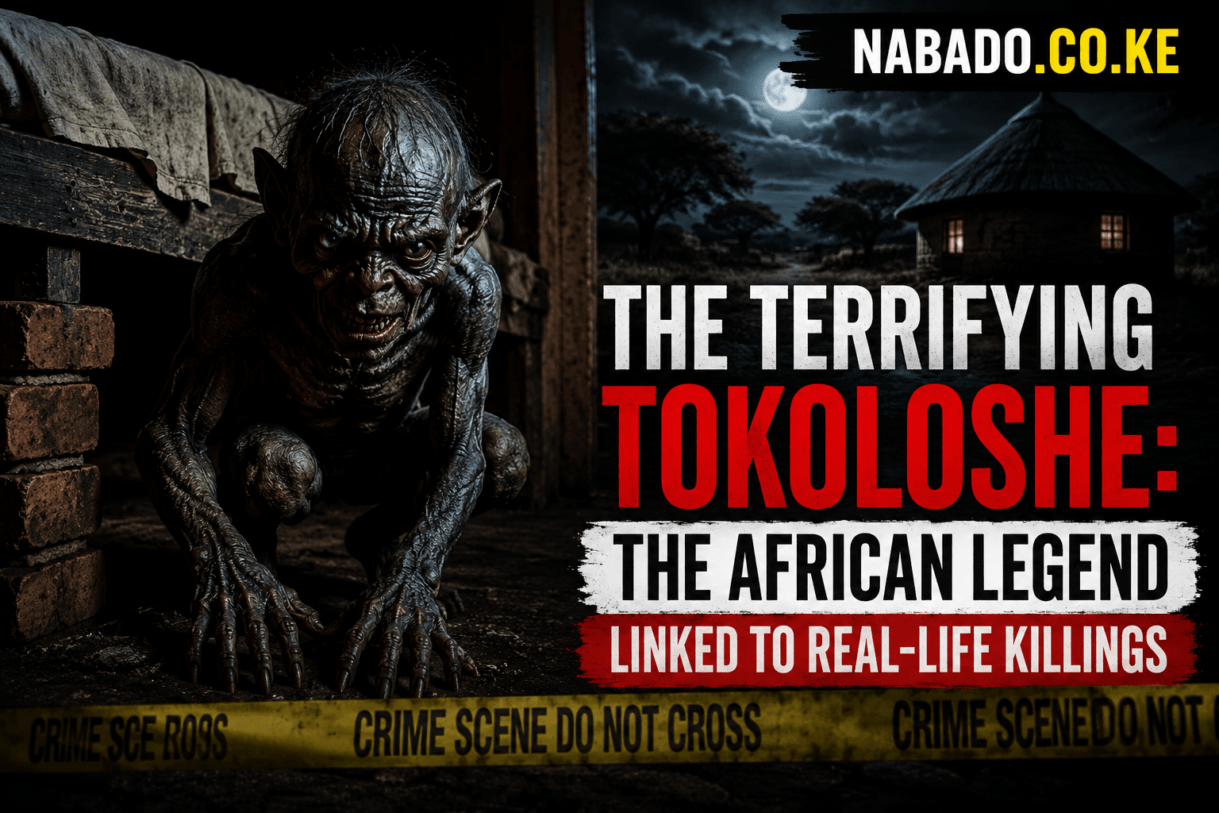
The sun had barely disappeared behind the hills when silence settled over the village. Doors were locked earlier than usual. Children were called indoors before darkness fully arrived. In one modest home, an elderly woman carefully slid four large bricks beneath each corner of her bed.
To an outsider, the scene might have looked strange. Why raise a bed nearly half a meter off the ground?
For her, it wasn’t superstition.
It was protection.
She believed that if the Tokoloshe came during the night, it would not be able to reach her.
Whether the creature was real did not matter nearly as much as the fear it inspired. Across generations, stories of the Tokoloshe have shaped traditions, influenced decisions, and, in some tragic cases, become intertwined with acts of real violence.
The Tokoloshe is one of Southern Africa’s most enduring legends. While many people regard it as folklore passed down through generations, belief in the creature remains strong in some communities. Over the years, police investigations, court cases, and community conflicts have occasionally featured claims involving the Tokoloshe, revealing how powerful deeply held beliefs can become.
This is not simply a story about a mythical creature.
It is a story about fear, culture, and the extraordinary influence that belief can have on human behavior.
A Legend Older Than Modern South Africa
Long before highways crossed the countryside or cities stretched toward the horizon, stories traveled by word of mouth.
Parents told them beside evening fires.
Grandparents shared them with curious grandchildren.
Among those stories was the tale of the Tokoloshe.
Descriptions vary from one community to another. Some portray it as a small, hairy, human-like creature. Others describe it as an invisible spirit capable of causing nightmares, illness, or misfortune. In some traditions, it is believed to be summoned through witchcraft to torment a specific victim.
No single version exists.
Instead, the Tokoloshe has evolved with each generation, adapting to local customs and beliefs while remaining one of the region’s most recognizable supernatural figures.
For believers, it represents far more than folklore. It is viewed as a genuine spiritual threat capable of interfering with everyday life.
Why So Many Beds Stand on Bricks
One of the most recognizable traditions associated with the Tokoloshe is the practice of elevating beds.
Visitors to parts of South Africa, Zimbabwe, Lesotho, and neighboring regions have sometimes noticed beds resting on bricks or concrete blocks.
The explanation lies in traditional belief.
According to many stories, the Tokoloshe moves close to the ground. Raising a bed is thought to reduce its ability to reach someone while they sleep.
Whether effective or not is beside the point.
The practice demonstrates how folklore can shape ordinary household routines for generations.
To families who sincerely hold these beliefs, lifting a bed is no different from locking a front door before going to sleep.
When Legends Become Real-Life Motives
Folklore usually remains harmless.
Stories entertain children.
Legends preserve culture.
Myths explain mysteries.
Occasionally, however, belief becomes so strong that it influences real decisions.
Across Southern Africa, investigators have encountered criminal cases in which suspects or witnesses claimed that the Tokoloshe played a role in events. In some instances, individuals accused neighbors or relatives of sending the creature through witchcraft. Long-standing disputes, grief after unexplained deaths, or fear of misfortune sometimes escalated into accusations that had devastating consequences.
Importantly, courts evaluate these incidents using evidence, not supernatural explanations. Claims about the Tokoloshe may help explain a person’s beliefs or motives, but they do not establish that supernatural events occurred.
Fear Can Change Human Behavior
Psychologists have long recognized that beliefs—whether religious, cultural, or supernatural—can shape how people interpret ordinary experiences.
A strange noise at night.
A vivid nightmare.
An unexplained illness.
A run of bad luck.
When someone already believes in a supernatural explanation, these events may reinforce that belief. This process, sometimes called confirmation bias, can make frightening ideas seem increasingly real to those who hold them.
Sleep paralysis offers another example. During an episode, a person may awaken unable to move and sometimes experience vivid hallucinations. Around the world, different cultures have attributed such experiences to different supernatural beings. In parts of Southern Africa, some people interpret them as attacks by the Tokoloshe.
Science and folklore often offer different explanations for the same experience.
Community Tensions and Dangerous Accusations
Belief alone does not cause violence.
More often, violence arises when fear combines with existing conflict.
A disagreement over property.
A family dispute.
Jealousy between neighbors.
The unexplained death of a loved one.
In emotionally charged situations, rumors can spread quickly. Someone may be accused of practicing witchcraft or of sending supernatural forces to harm others. Once such accusations take hold, innocent people can become targets.
History has shown that communities under stress sometimes seek simple explanations for complex problems. Unfortunately, those explanations can lead to intimidation, assault, or even murder.
What Police Investigators Actually Look For
When a crime occurs, investigators focus on tangible evidence.
They examine crime scenes, interview witnesses, analyze forensic evidence, and establish timelines. Claims involving supernatural creatures may appear in witness statements or interviews, but criminal responsibility is determined through evidence and the law.
In some cases, mental health evaluations are also conducted if a suspect reports experiences or beliefs that raise questions about their psychological state.
The justice system does not determine whether folklore is true. It determines whether a criminal offense occurred and whether the evidence supports prosecution.
Respecting Culture While Rejecting Violence
It is important to distinguish cultural traditions from harmful actions.
Millions of people across Southern Africa cherish traditional stories as part of their heritage. Many also consult traditional healers for spiritual guidance, healing practices, or cultural ceremonies.
These traditions are not inherently linked to violence.
Problems arise when fear, rumor, or personal conflict leads people to accuse others without evidence. Responsible community leaders, religious organizations, traditional authorities, and law enforcement have often worked together to discourage vigilante attacks and promote peaceful resolution of disputes.
Respect for culture and respect for human rights can—and should—coexist.
The Tokoloshe in Modern Popular Culture
The legend has also found its way into books, films, television, and art. Writers and filmmakers have reimagined the Tokoloshe as a horror figure, a metaphor for fear, or a symbol of unresolved social tensions.
These fictional portrayals have introduced the legend to audiences around the world, but they sometimes blur the line between folklore and documented history. As a result, sensational stories can overshadow the more complex reality: the true impact of the Tokoloshe lies not in verified supernatural encounters, but in the very real influence that belief can have on individuals and communities.
A Lesson Beyond the Legend
The Tokoloshe story is ultimately about more than a mysterious creature.
It reminds us that beliefs—whether cultural, religious, or supernatural—can profoundly influence human behavior. They can offer comfort, preserve identity, and strengthen communities. But when fear replaces evidence or when accusations are made without proof, the consequences can be tragic.
Understanding this distinction is essential. We can appreciate folklore as an important part of cultural heritage while recognizing that crimes must be investigated through facts, evidence, and the rule of law.
For generations, the Tokoloshe has occupied a unique place in Southern African folklore. To some, it is simply a story told after sunset. To others, it remains a deeply meaningful part of their spiritual worldview.
Regardless of personal belief, its cultural influence is undeniable. Traditions such as raising beds on bricks, stories passed from one generation to the next, and occasional criminal cases in which people invoke the Tokoloshe all demonstrate how powerful folklore can be.
The most unsettling aspect of the Tokoloshe is not whether it exists. It is the reminder that fear, when left unchecked, can shape decisions, deepen suspicion, and sometimes contribute to real-world harm.
In the end, the legend endures because it speaks to something timeless: humanity’s search for explanations in the face of the unknown—and the importance of responding to that uncertainty with compassion, critical thinking, and justice.
SUGGESTED READS
- They Killed Their Neighbors in Just 100 Days: The Terrifying True Story of Rwanda’s Genocide
- The Child Witch Hunts: Africa’s Dark Secret That Stole Thousands of Childhoods
- The Basement of Fear: Inside the Dark Story of Kenya’s Nyayo House Torture Chambers
- What Fishermen Pulled From the Nile During Idi Amin’s Reign Still Haunts Uganda Today
- The Night Terror of Tsavo: When Two Lions Brought a Railway to Its Knees
- The Town That Never Stopped Burning: The Chilling Story of Centralia’s Underground Fire
- The Ghost That Helped Solve a Murder: The Chilling Story of the Greenbrier Ghost

Support Our Website!
We appreciate your visit and hope you find our content valuable. If you’d like to support us further, please consider contributing through the TILL NUMBER: 9549825. Your support helps us keep delivering great content!
If you’d like to support Nabado from outside Kenya, we invite you to send your contributions through trusted third-party services such as Remitly, western union, SendWave, or WorldRemit. These platforms are reliable and convenient for international money transfers.
Please use the following details when sending your support:
Phone Number: +254701838999
Recipient Name: Peterson Getuma Okemwa
We sincerely appreciate your generosity and support. Thank you for being part of this journey!