

simply amazing, always for you.
History is filled with tragedies, wars, and moments of unimaginable suffering. Yet few events in modern times compare to the speed, brutality, and devastation of the 1994 Rwandan Genocide.
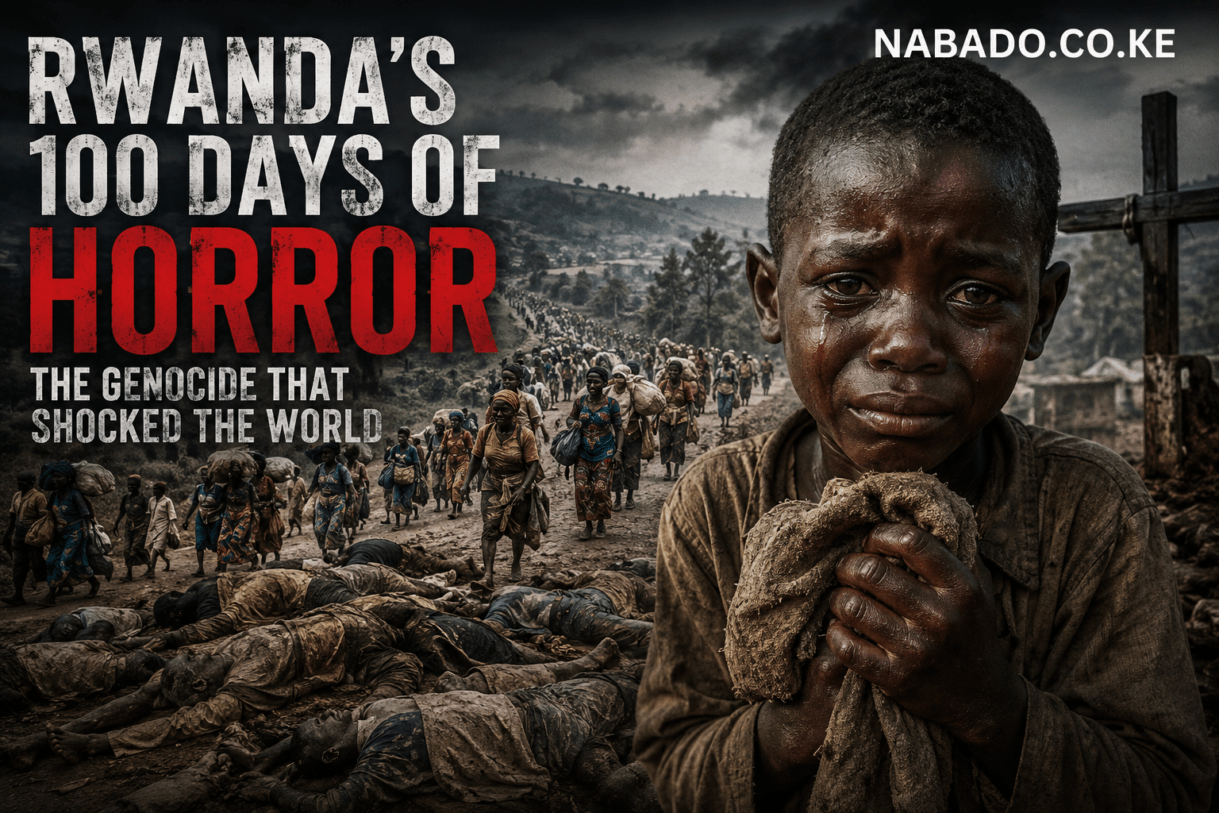
For approximately 100 days between April and July 1994, Rwanda descended into a nightmare. Neighbors killed neighbors. Families were wiped out. Churches became killing grounds. Schools became execution sites. Roads turned into rivers of blood.
By the time the violence ended, around 800,000 people had been murdered, most of them members of the Tutsi minority. Many others suffered injuries, trauma, displacement, and losses that would haunt them for the rest of their lives.
The genocide was not simply an outbreak of violence. It was a carefully organized campaign fueled by years of ethnic division, political manipulation, propaganda, and fear.
More than three decades later, Rwanda’s story remains a powerful warning about how quickly humanity can descend into darkness when hatred is allowed to flourish unchecked.
A Beautiful Nation with Deep Wounds
Before the genocide, Rwanda was known as the “Land of a Thousand Hills.”
Located in East Africa, the country was admired for its stunning landscapes, fertile farmland, and resilient people. Yet beneath its beauty lay decades of tension that would eventually explode into one of history’s worst atrocities.
The roots of Rwanda’s ethnic divisions stretched back to colonial times.
For centuries, Hutus and Tutsis had lived alongside one another. While differences existed, the identities were often fluid and connected more to social status than rigid ethnic separation.
Everything changed during European colonial rule.
German and later Belgian colonial administrators classified people into ethnic categories and elevated certain groups over others. Identity cards were introduced, labeling citizens as Hutu, Tutsi, or Twa.
These policies deepened divisions that would later become deadly.
Over time, resentment grew. Political power shifted. Violence erupted periodically. Each generation inherited grievances from the one before it.
By the early 1990s, Rwanda was a nation sitting on a powder keg.
The Civil War That Increased Tensions
In 1990, the Rwandan Patriotic Front (RPF), largely composed of Tutsi refugees and their descendants, launched an invasion from neighboring Uganda.
The invasion sparked a civil war.
Government officials and extremist politicians used the conflict to spread fear among ordinary Hutus. They warned that Tutsis were planning to dominate the country and enslave the Hutu majority.
State-controlled media amplified these messages.
Extremist groups portrayed all Tutsis as enemies, regardless of age, gender, or political affiliation.
As tensions escalated, militias were trained and armed.
Among the most notorious was the Interahamwe militia, whose members would later become key perpetrators during the genocide.
To many outside observers, Rwanda appeared unstable.
Few imagined the scale of the catastrophe that was approaching.
The Plane Crash That Changed Everything
On the evening of April 6, 1994, a plane carrying Rwandan President Juvénal Habyarimana was shot down as it approached Kigali.
Everyone on board was killed.
The identity of those responsible remains disputed, but within hours extremist leaders seized the opportunity.
The assassination became the trigger they had been waiting for.
Roadblocks appeared almost immediately across Kigali and other parts of the country.
Soldiers and militia members began checking identification cards.
Those identified as Tutsi were often killed on the spot.
Moderate Hutu politicians who supported peace were among the first targets.
The killings spread with terrifying speed.
What began as political assassinations quickly transformed into a nationwide campaign of extermination.
When Ordinary People Became Killers
One of the most disturbing aspects of the genocide was the participation of ordinary civilians.
Many perpetrators were not professional soldiers.
They were farmers.
Shopkeepers.
Teachers.
Drivers.
Neighbors.
People who had shared meals and celebrations with Tutsi families suddenly became participants in murder.
Some joined willingly.
Others acted out of fear.
Some were threatened with death if they refused.
Entire communities were pressured into taking part.
The genocide revealed how propaganda, fear, and authority can push ordinary people to commit extraordinary acts of cruelty.
Survivors would later recount seeing childhood friends among the attackers.
For many, the betrayal was as painful as the violence itself.
The Deadly Power of Propaganda
Words can save lives.
They can also destroy them.
In Rwanda, propaganda became one of the genocide’s most powerful weapons.
Radio stations repeatedly broadcast messages portraying Tutsis as dangerous enemies.
They were dehumanized and described using hateful language.
Listeners were encouraged to view them not as fellow human beings but as threats that needed to be eliminated.
The infamous Radio Télévision Libre des Mille Collines became particularly notorious.
Broadcasters named targets, provided information about hiding places, and openly encouraged violence.
The radio became a tool of mass murder.
In villages across the country, people listened as hate-filled messages poured from speakers.
The broadcasts helped transform fear into action.
The consequences were catastrophic.
Churches Became Death Traps
As violence intensified, terrified families searched desperately for safety.
Many fled to churches.
Historically, churches had been places of refuge during times of conflict.
Thousands believed they would be protected within their walls.
Instead, many churches became scenes of unimaginable slaughter.
Attackers surrounded buildings filled with civilians.
Grenades were thrown through windows.
Doors were broken down.
Mass killings followed.
At places such as Nyamata and Ntarama, thousands were murdered while seeking sanctuary.
Today, some of these churches remain preserved as memorial sites.
Clothing, personal belongings, and human remains stand as silent reminders of what happened.
Visitors often leave overwhelmed by the scale of the tragedy.
The Horrors Experienced by Women
Women suffered uniquely during the genocide.
Thousands were subjected to sexual violence.
Rape was used systematically as a weapon of war.
Many women were attacked repeatedly.
Others were forced into sexual slavery.
The physical injuries were devastating.
The emotional scars often lasted a lifetime.
Some survivors later discovered they had contracted HIV.
Others gave birth to children conceived through violence.
Even decades later, many continue to struggle with trauma.
Their stories reveal another painful dimension of the genocide that cannot be ignored.
Children Caught in the Nightmare
Perhaps the most heartbreaking victims were children.
Many watched their parents being murdered.
Others lost entire families.
Some survived by hiding beneath bodies for days.
Others wandered alone through forests and refugee camps.
Children who should have been playing, learning, and dreaming about the future instead witnessed horrors beyond comprehension.
Many carried those memories into adulthood.
The psychological impact remains profound.
Even today, survivors often describe recurring nightmares and emotional scars that never fully disappear.
The World’s Failure
One of the most controversial aspects of the genocide is how little the international community did to stop it.
Warning signs existed long before the killings began.
Diplomats reported growing tensions.
Human rights organizations documented threats.
Peacekeepers on the ground warned of preparations for mass violence.
Yet meaningful action never came.
As killings intensified, some foreign governments evacuated their citizens.
Meanwhile, ordinary Rwandans were left behind.
The United Nations had peacekeepers in Rwanda, but they lacked sufficient resources and authority.
Requests for reinforcements were delayed or ignored.
World leaders hesitated.
Political calculations outweighed humanitarian concerns.
By the time stronger international attention arrived, hundreds of thousands had already died.
The failure remains one of the greatest moral and political criticisms of the international community in the modern era.
Survival Against Impossible Odds
Despite the horror, stories of courage emerged.
Some individuals risked everything to save others.
Neighbors hid families.
Religious leaders sheltered civilians.
Strangers guided people to safety.
Many rescuers knew they could be killed if discovered.
Yet they chose compassion over fear.
Their actions remind us that even in humanity’s darkest moments, courage can survive.
These stories do not erase the tragedy.
But they demonstrate that goodness can persist even amid overwhelming evil.
The End of the Killing
The genocide finally ended in July 1994.
The Rwandan Patriotic Front advanced across the country and eventually captured Kigali.
As the RPF gained control, the killings gradually stopped.
Millions fled into neighboring countries.
Huge refugee camps emerged almost overnight.
The humanitarian crisis continued.
Disease spread rapidly.
Food shortages became common.
Families remained separated.
The nation was devastated.
Infrastructure was damaged.
The economy had collapsed.
Trust between communities had been shattered.
Rwanda faced the enormous challenge of rebuilding from the ashes.
Searching for Justice
After the genocide, one question dominated discussions:
How could justice be achieved?
The scale of the crimes was overwhelming.
Hundreds of thousands had participated directly or indirectly.
Traditional courts lacked the capacity to process so many cases.
The United Nations established the International Criminal Tribunal for Rwanda.
Its mission was to prosecute major organizers and leaders responsible for the genocide.
At the same time, Rwanda introduced Gacaca courts.
These community-based courts sought to address lower-level cases while promoting accountability and reconciliation.
The process was imperfect.
Critics and supporters continue to debate aspects of the system.
Nevertheless, it represented a massive effort to confront the past rather than ignore it.
Rebuilding a Broken Nation
Recovery did not happen overnight.
Rebuilding Rwanda required extraordinary determination.
Roads were repaired.
Schools reopened.
Businesses returned.
Communities slowly began reconnecting.
The government promoted national unity and discouraged ethnic identification in public life.
Economic reforms helped drive development.
Healthcare and education expanded.
Over time, Rwanda became one of Africa’s most notable examples of post-conflict reconstruction.
Today, visitors often express surprise at the country’s cleanliness, organization, and progress.
Yet beneath the success stories lies an enduring memory of the genocide.
The past remains impossible to forget.
Memorials That Preserve the Truth
Across Rwanda, memorials stand as reminders of what occurred.
Places such as Kigali Genocide Memorial, Nyamata Memorial, and Murambi Memorial attract visitors from around the world.
These sites preserve evidence of the atrocities.
Photographs tell personal stories.
Mass graves honor victims.
Educational exhibits explain how the genocide unfolded.
For survivors, these memorials provide spaces for remembrance.
For younger generations, they serve as powerful lessons.
For the world, they stand as warnings.
Why the Rwandan Genocide Still Matters Today
Some people view the genocide as a tragic event confined to history.
That would be a mistake.
Its lessons remain relevant today.
The genocide demonstrates how dangerous propaganda can become.
It shows how political leaders can manipulate fear.
It reveals the consequences of dehumanizing language.
Most importantly, it reminds us that genocide rarely appears without warning.
There are often signs.
Hate speech.
Discrimination.
Political extremism.
Targeting of minority groups.
Ignoring these warning signs can have devastating consequences.
The Rwandan genocide teaches that prevention must begin long before violence erupts.
The Survivors Who Carry the Memory
For survivors, the genocide is not merely history.
It is a lived experience.
Many continue to search for missing relatives.
Others visit memorials to honor loved ones.
Some share their stories to educate future generations.
Their testimonies provide an invaluable record of what happened.
They remind us that behind every statistic was a human being.
A mother.
A father.
A child.
A friend.
A dream that was never fulfilled.
A life that mattered.
The Rwandan Genocide remains one of the darkest chapters in human history.
In approximately 100 days, nearly 800,000 people were murdered in a campaign driven by hatred, fear, propaganda, and political extremism.
The world watched as communities collapsed and innocent lives were destroyed.
Yet the story of Rwanda is not only one of tragedy.
It is also a story of resilience.
Survivors rebuilt their lives.
Communities sought reconciliation.
A shattered nation found a path forward.
The genocide serves as a permanent warning to humanity.
It reminds us that hatred left unchecked can destroy entire societies.
It reminds us that silence in the face of injustice carries consequences.
And it reminds us that remembering the past is essential if we hope to prevent similar horrors in the future.
More than thirty years later, the echoes of Rwanda’s 100 days of horror still resonate across the world, urging every generation to choose compassion over hatred, unity over division, and humanity over violence.
SUGGESTED READS
- The Dancing Plague of 1518: The Terrifying Mystery of the People Who Couldn’t Stop Dancing
- The Chilling Mystery of Dyatlov Pass
- The Man Who Received Calls From the Dead
- The Radio Station That Predicted a Murder
- The Bear Who Went to War: The Unbelievable Story of Wojtek
- The Woman Who Fell 33,000 Feet and Lived: The Astonishing Story of Vesna Vulović
- The Great Emu War: When Australia Lost a Battle Against Birds

Support Our Website!
We appreciate your visit and hope you find our content valuable. If you’d like to support us further, please consider contributing through the TILL NUMBER: 9549825. Your support helps us keep delivering great content!
If you’d like to support Nabado from outside Kenya, we invite you to send your contributions through trusted third-party services such as Remitly, western union, SendWave, or WorldRemit. These platforms are reliable and convenient for international money transfers.
Please use the following details when sending your support:
Phone Number: +254701838999
Recipient Name: Peterson Getuma Okemwa
We sincerely appreciate your generosity and support. Thank you for being part of this journey!